EyesMatter website newsletter

St Patrick’s Day newsletter

St. Patrick’s Day Edition 2026

Luck Favours the Well-Prepared Eye

St Patrick’s Day Update from EyesMatter

Innovations in corneal surgery, cataract care, and research shaping better outcomes for patients.

Inside this edition
  • Winter Viruses and Your Eyes
  • Tracking Outcomes in Corneal Transplant Surgery
  • Cataract Surgery and Fuchs’
  • Laser assisted corneal and cataract surgery
  • When Should You Refer?

St Patrick’s Day joke: Why do ophthalmologists enjoy St Patrick’s Day? Because everyone finally appreciates good green light.

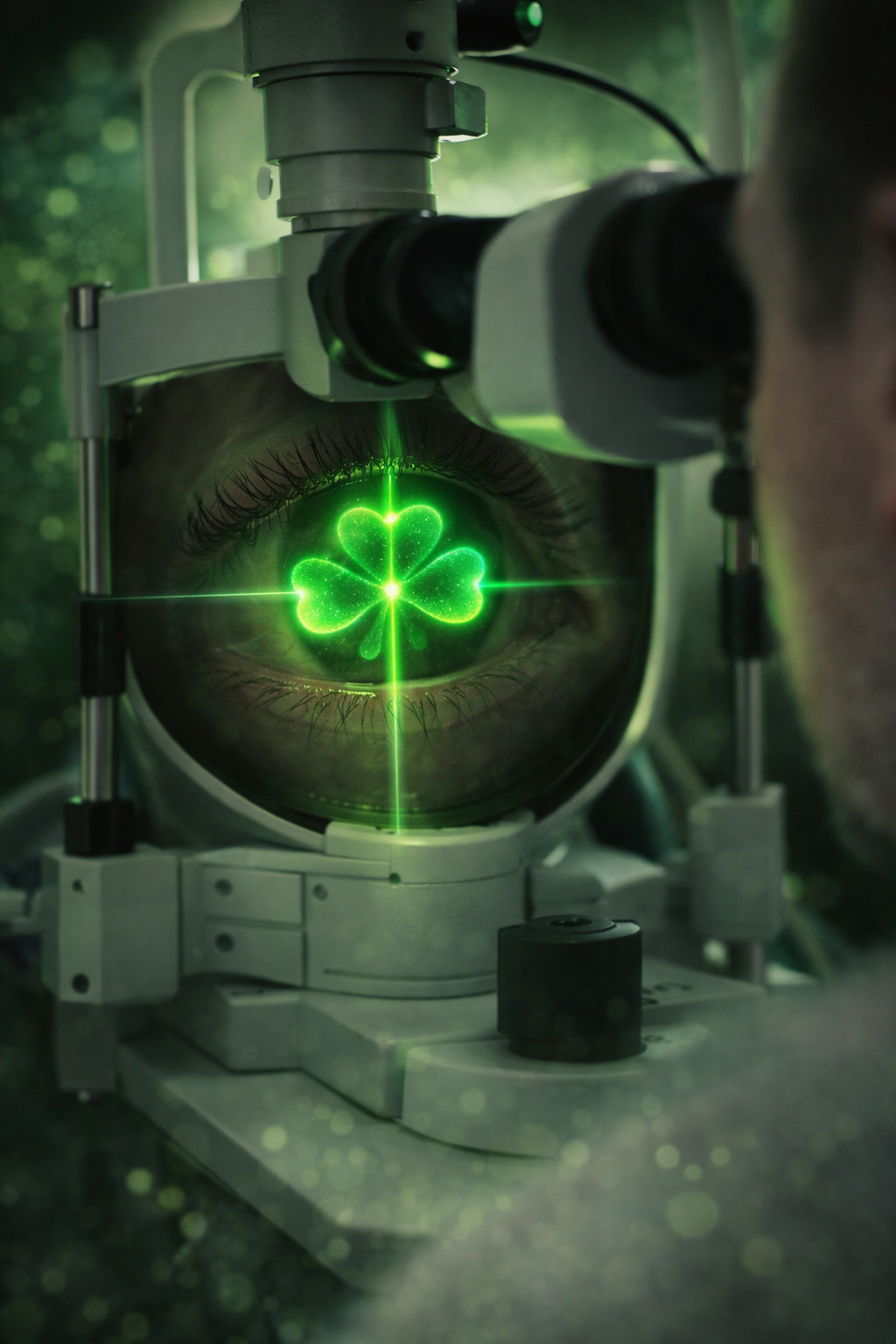
St Patrick's Day shamrock slit lamp image
1

Winter Viruses and Your Eyes

As the weather cools and we move into autumn and winter, viral infections become more common. One that often affects the eyes is adenoviral conjunctivitis, commonly called “pink eye.”

This infection is highly contagious and spreads easily in homes, schools and workplaces. For most people it causes red, watery, irritated eyes that settle within a week or two.

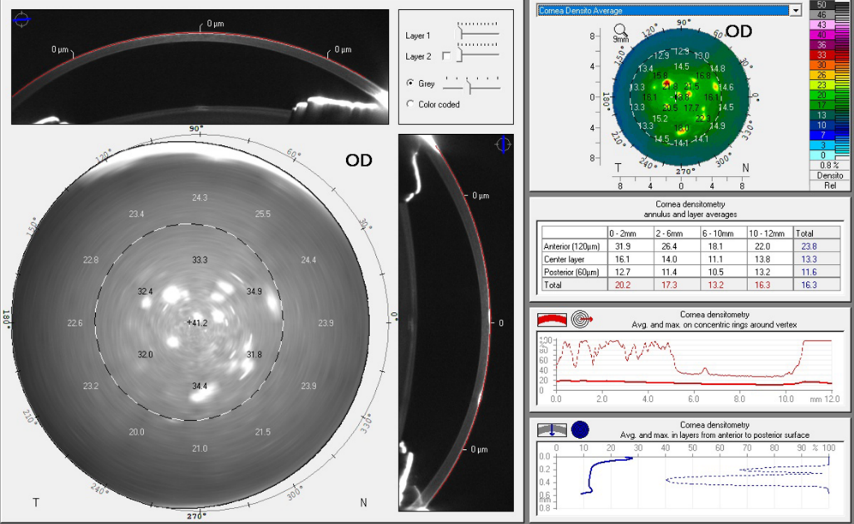
Occasionally the virus can cause inflammation in the cornea, the clear window at the front of the eye (Figure 1). This may lead to glare, light sensitivity and blurred vision that can last several months.

Anti-inflammatory eye drops are sometimes used to improve comfort and vision, although they must be used carefully.

Researchers are now exploring whether Losartan, a medication long used for blood pressure, may help reduce corneal inflammation and decrease reliance on steroid drops. Early results are promising and illustrate how existing medicines can sometimes find new uses in eye care.

Figure 1 adenoviral keratitis
Figure 1. The sub-epithelial infiltrates found in Adenoviral Keratitis that scatter light entering the eye causing glare and temporarily blurring vision.
2

Tracking Outcomes in Corneal Transplant Surgery

In Australia, the Australian Corneal Graft Registry carefully tracks the results of corneal transplant surgery performed across the country. This independent registry has been collecting and analysing outcomes for more than 30 years and is widely respected internationally for helping surgeons understand what leads to the best patient outcomes.

It is a privilege to contribute data to this registry. By comparing results from surgeons across Australia, it helps ensure patients receive the highest standard of care. The registry is currently supported by DonateLife.

Understanding Fuchs’ Corneal Dystrophy

One condition commonly treated with corneal transplantation is Fuchs’ endothelial dystrophy.

This condition affects the inner layer of the cornea—the clear window at the front of the eye—which normally pumps fluid out of the cornea to keep it clear.

Over time, the number of these cells slowly declines and small deposits called guttae form. As the condition progresses, the cornea can become swollen and cloudy.

Fuchs’ dystrophy is actually quite common and is estimated to affect around 4% of the population, although many people have only mild disease and never develop symptoms.

3

Cataract Surgery and Fuchs’

For patients with mild Fuchs’ dystrophy, cataract surgery alone is usually enough to restore good vision.

However, patients with more advanced disease may require a corneal transplant at the same time as cataract surgery. If cataract surgery is performed alone in these cases, the cornea may not recover well and some patients later develop painful swelling of the cornea.

Studies suggest that many patients with moderate to severe disease who undergo cataract surgery alone may eventually require a second operation to transplant the cornea.

The Australian Corneal Graft Registry has shown that, in appropriate patients, combining cataract surgery with corneal transplantation can lead to better long-term outcomes.

This is one reason why referral of cataract patients with Fuchs’ dystrophy to a corneal specialist can be valuable when planning surgery.

Surgical Outcomes

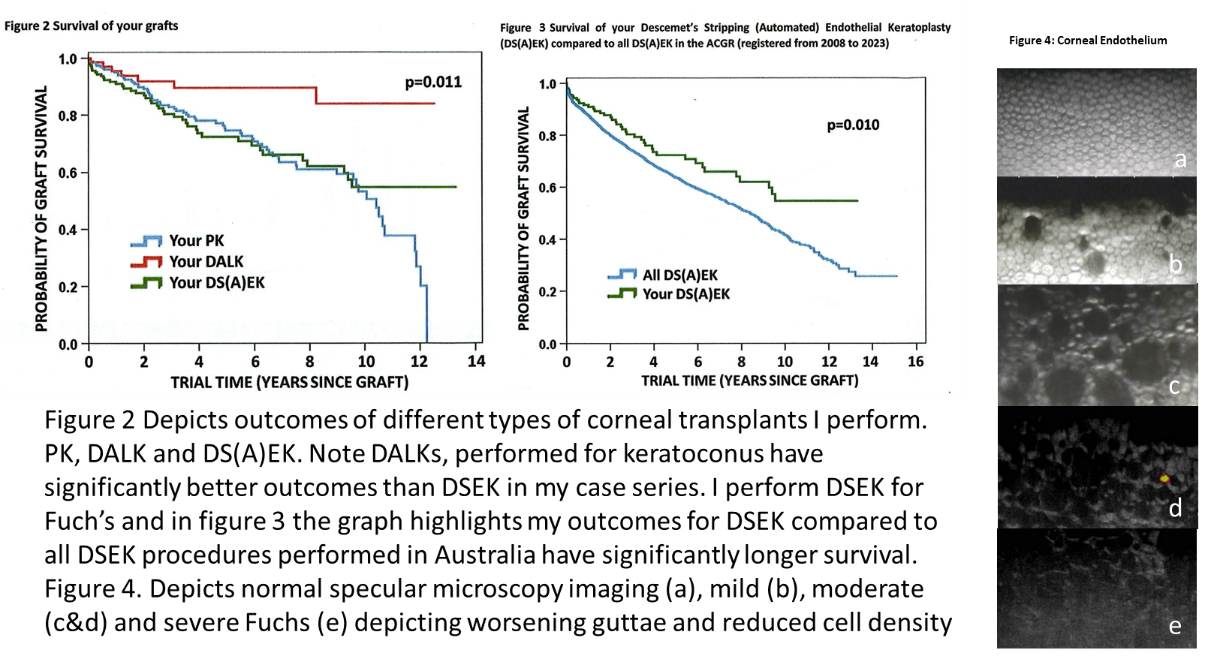
The graph below shows my own results for some of the modern corneal transplant techniques. Figure 2 looks at different types of transplant and their overall survival in my case series. Figure 3 focuses on the DSEK procedure, a posterior lamellar transplant, used primarily to treat Fuchs’ dystrophy and compares my outcomes with the average Australian corneal surgeon.

According to data independently analysed by the Australian Corneal Graft Registry, the long-term survival of these grafts in my patients has been significantly higher than the national average for this procedure. I’m very proud of this outcome, which reflects the careful planning and attention to detail that these delicate surgeries require.

Figures 2 and 3 graft survival graphs
4

Laser assisted corneal and cataract surgery

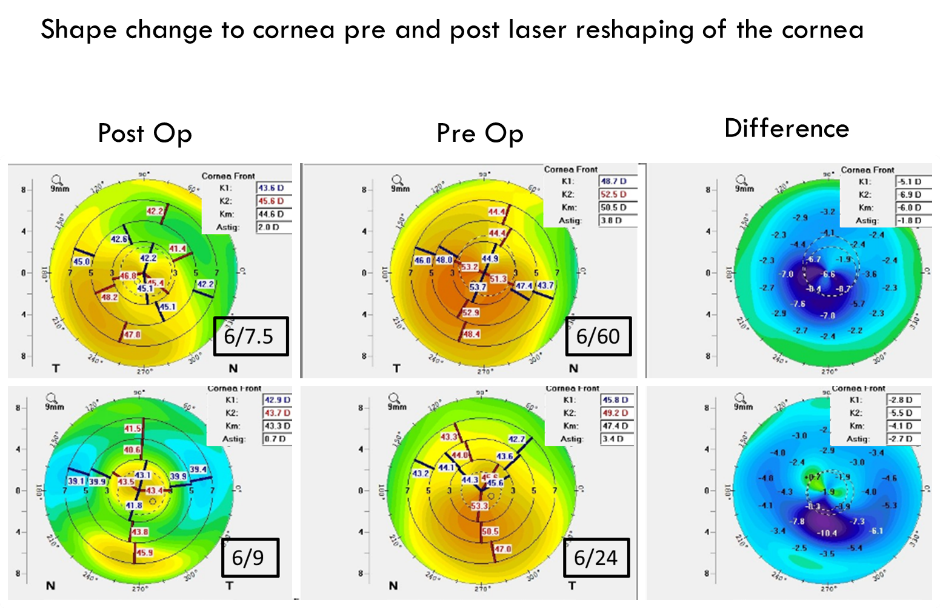
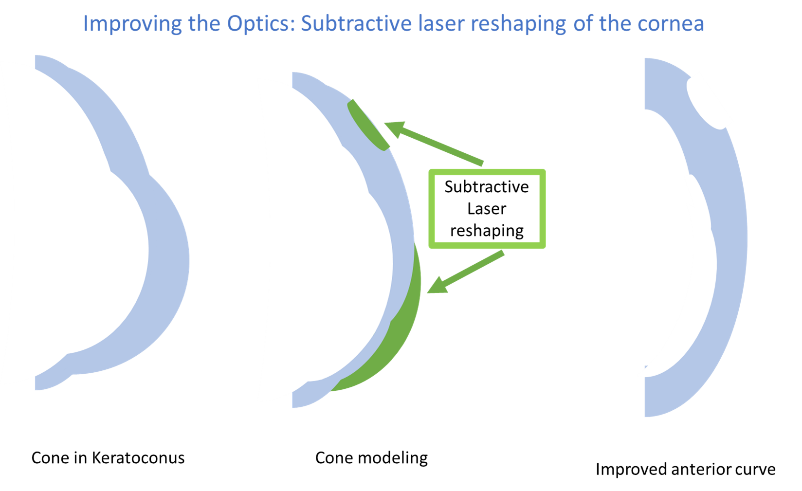
Figure 5 & 6: Excimer Laser reshaping of the cornea to aid visual optics regularises the irregular cornea found in keratoconus so spectacles are simpler and work better. Combining the reshaping with corneal cross linking simultaneously locks in that new shape and stabilises the disease in 95% of adults. This often improves the unaided vision. The upper patient pairing improved from 6/60 to 6/7.5 which is huge! The lower patient pairing shows another significant improvement in unaided vision.

Keratoconus topography before and after
Laser reshaping diagram

We at Eyesmatter offer rapid sequential cataract surgery and the related refractive lens exchange. Be it 3 days or 1 week apart, modern cataract surgery lends itself to rapid rehabilitation. For busy people keen to minimise downtime to high myopes with disabling binocular imbalance in between procedures we have listened and we have introduced fast track capabilities to improve the patient journey.

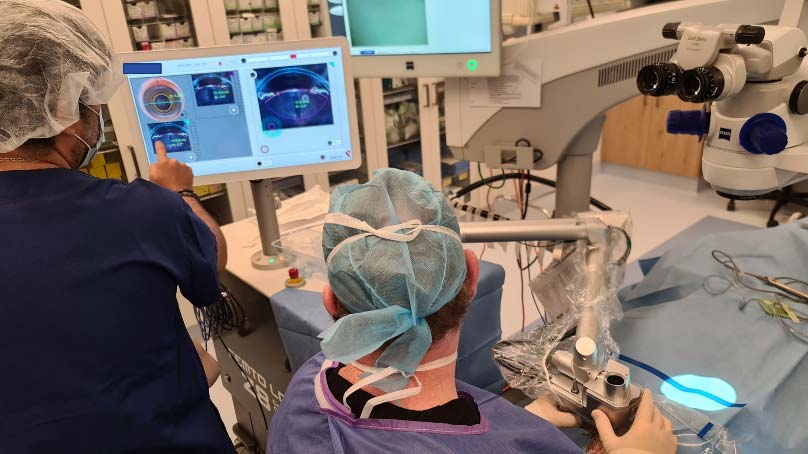
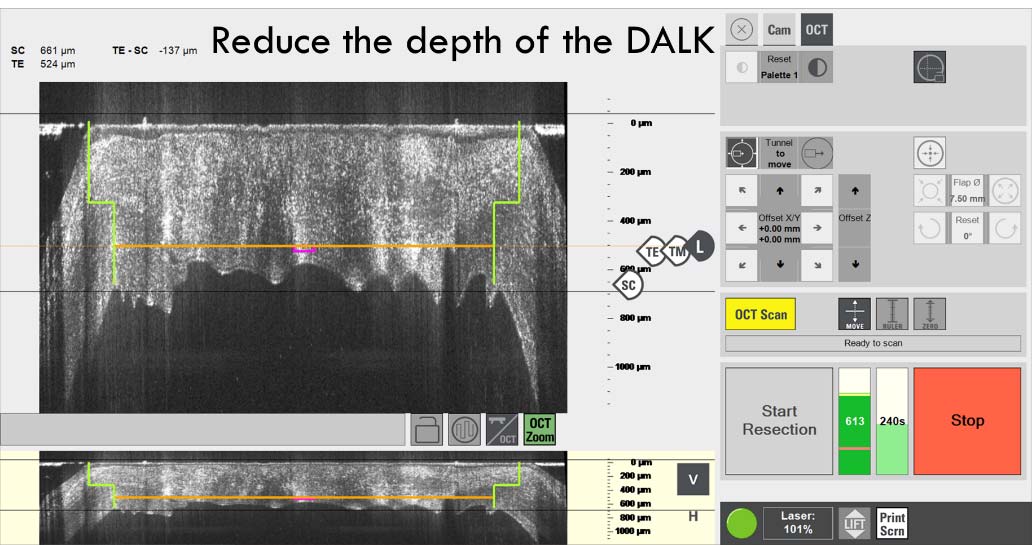
Figure 7 & 8: Other lasers can cut 3 dimensional shapes. No longer do we need to go straight up and down with a circular trephine as we have done for over 100 years for a corneal transplant. Now we can create a mushroom profile to the graft-host junction which promotes astigmatism control and faster healing.

Laser in theatre
Corneal transplant laser geometry
5

When Should You Refer?

EyesMatter welcomes referrals for assessment and management of complex anterior segment disease.

Consider referral when patients present with:

Keratoconus

  • Never dismiss the skew reflex no matter how good the unaided vision is
  • progressive topographic change
  • intolerance to contact lenses
  • declining visual acuity despite refraction
  • We run a bulk billed screening clinic: Positive Family Hx, Eye rubbers, Pacific Islander heritage

Corneal disease

  • Fuchs endothelial dystrophy: Think anterior segment not cataract surgeon involvement, if you can see it at the slit lamp it’s not mild disease
  • corneal scarring affecting visual quality

Pterygium and Ocular Surface Tumours

  • Discomfort often dry eye often respond to surgical excision
  • Atypical pterygia require further subspecialist assessment

Cataract

  • visually significant cataract affecting daily activities
  • high refractive error where lens surgery may provide refractive benefit
  • The experience we have with complex anterior segment disease still contributes to best outcomes in normal eyes

Complex anterior segment problems

  • irregular astigmatism
  • post refractive surgery complications
  • artificial iris reconstruction cases

Clinic locations

EyesMatter Southside Clinic
Level 2, 1808 Logan Road, Upper Mount Gravatt, Q4122

EyesMatter Westside Clinic
Level 3, Westside Private Hospital, 32 Morrow Street, Taringa, Q4068

EyesMatter Gold Coast Clinic
Level 4, Pacific Private Clinic, 123 Nerang Street, Southport, Gold Coast

Telephone
07-3193-1100

Admin email
admin@eyesmatter.com.au

6
St. Patrick’s Day Edition 2026

Luck Favours the Well-Prepared Eye

St Patrick’s Day Update from EyesMatter

Innovations in corneal surgery, cataract care, and research shaping better outcomes for patients.

Inside this edition
  • Winter Viruses and Your Eyes
  • Tracking Outcomes in Corneal Transplant Surgery
  • Cataract Surgery and Fuchs’
  • Laser assisted corneal and cataract surgery
  • When Should You Refer?

St Patrick’s Day joke: Why do ophthalmologists enjoy St Patrick’s Day? Because everyone finally appreciates good green light.

St Patrick's Day shamrock slit lamp image
1

Winter Viruses and Your Eyes

As the weather cools and we move into autumn and winter, viral infections become more common. One that often affects the eyes is adenoviral conjunctivitis, commonly called “pink eye.”

This infection is highly contagious and spreads easily in homes, schools and workplaces. For most people it causes red, watery, irritated eyes that settle within a week or two.

Occasionally the virus can cause inflammation in the cornea, the clear window at the front of the eye (Figure 1). This may lead to glare, light sensitivity and blurred vision that can last several months.

Anti-inflammatory eye drops are sometimes used to improve comfort and vision, although they must be used carefully.

Researchers are now exploring whether Losartan, a medication long used for blood pressure, may help reduce corneal inflammation and decrease reliance on steroid drops. Early results are promising and illustrate how existing medicines can sometimes find new uses in eye care.

Figure 1 adenoviral keratitis
Figure 1. The sub-epithelial infiltrates found in Adenoviral Keratitis that scatter light entering the eye causing glare and temporarily blurring vision.
2

Tracking Outcomes in Corneal Transplant Surgery

In Australia, the Australian Corneal Graft Registry carefully tracks the results of corneal transplant surgery performed across the country. This independent registry has been collecting and analysing outcomes for more than 30 years and is widely respected internationally for helping surgeons understand what leads to the best patient outcomes.

It is a privilege to contribute data to this registry. By comparing results from surgeons across Australia, it helps ensure patients receive the highest standard of care. The registry is currently supported by DonateLife.

Understanding Fuchs’ Corneal Dystrophy

One condition commonly treated with corneal transplantation is Fuchs’ endothelial dystrophy.

This condition affects the inner layer of the cornea—the clear window at the front of the eye—which normally pumps fluid out of the cornea to keep it clear.

Over time, the number of these cells slowly declines and small deposits called guttae form. As the condition progresses, the cornea can become swollen and cloudy.

Fuchs’ dystrophy is actually quite common and is estimated to affect around 4% of the population, although many people have only mild disease and never develop symptoms.

3

Cataract Surgery and Fuchs’

For patients with mild Fuchs’ dystrophy, cataract surgery alone is usually enough to restore good vision.

However, patients with more advanced disease may require a corneal transplant at the same time as cataract surgery. If cataract surgery is performed alone in these cases, the cornea may not recover well and some patients later develop painful swelling of the cornea.

Studies suggest that many patients with moderate to severe disease who undergo cataract surgery alone may eventually require a second operation to transplant the cornea.

The Australian Corneal Graft Registry has shown that, in appropriate patients, combining cataract surgery with corneal transplantation can lead to better long-term outcomes.

This is one reason why referral of cataract patients with Fuchs’ dystrophy to a corneal specialist can be valuable when planning surgery.

Surgical Outcomes

The graph below shows my own results for some of the modern corneal transplant techniques. Figure 2 looks at different types of transplant and their overall survival in my case series. Figure 3 focuses on the DSEK procedure, a posterior lamellar transplant, used primarily to treat Fuchs’ dystrophy and compares my outcomes with the average Australian corneal surgeon.

According to data independently analysed by the Australian Corneal Graft Registry, the long-term survival of these grafts in my patients has been significantly higher than the national average for this procedure. I’m very proud of this outcome, which reflects the careful planning and attention to detail that these delicate surgeries require.

Figures 2 and 3 graft survival graphs
4

Laser assisted corneal and cataract surgery

Figure 5 & 6: Excimer Laser reshaping of the cornea to aid visual optics regularises the irregular cornea found in keratoconus so spectacles are simpler and work better. Combining the reshaping with corneal cross linking simultaneously locks in that new shape and stabilises the disease in 95% of adults. This often improves the unaided vision. The upper patient pairing improved from 6/60 to 6/7.5 which is huge! The lower patient pairing shows another significant improvement in unaided vision.

Keratoconus topography before and after
Laser reshaping diagram

We at Eyesmatter offer rapid sequential cataract surgery and the related refractive lens exchange. Be it 3 days or 1 week apart, modern cataract surgery lends itself to rapid rehabilitation. For busy people keen to minimise downtime to high myopes with disabling binocular imbalance in between procedures we have listened and we have introduced fast track capabilities to improve the patient journey.

Figure 7 & 8: Other lasers can cut 3 dimensional shapes. No longer do we need to go straight up and down with a circular trephine as we have done for over 100 years for a corneal transplant. Now we can create a mushroom profile to the graft-host junction which promotes astigmatism control and faster healing.

Laser in theatre
Corneal transplant laser geometry
5

When Should You Refer?

EyesMatter welcomes referrals for assessment and management of complex anterior segment disease.

Consider referral when patients present with:

Keratoconus

  • Never dismiss the skew reflex no matter how good the unaided vision is
  • progressive topographic change
  • intolerance to contact lenses
  • declining visual acuity despite refraction
  • We run a bulk billed screening clinic: Positive Family Hx, Eye rubbers, Pacific Islander heritage

Corneal disease

  • Fuchs endothelial dystrophy: Think anterior segment not cataract surgeon involvement, if you can see it at the slit lamp it’s not mild disease
  • corneal scarring affecting visual quality

Pterygium and Ocular Surface Tumours

  • Discomfort often dry eye often respond to surgical excision
  • Atypical pterygia require further subspecialist assessment

Cataract

  • visually significant cataract affecting daily activities
  • high refractive error where lens surgery may provide refractive benefit
  • The experience we have with complex anterior segment disease still contributes to best outcomes in normal eyes

Complex anterior segment problems

  • irregular astigmatism
  • post refractive surgery complications
  • artificial iris reconstruction cases

Clinic locations

EyesMatter Southside Clinic
Level 2, 1808 Logan Road, Upper Mount Gravatt, Q4122

EyesMatter Westside Clinic
Level 3, Westside Private Hospital, 32 Morrow Street, Taringa, Q4068

EyesMatter Gold Coast Clinic
Level 4, Pacific Private Clinic, 123 Nerang Street, Southport, Gold Coast

Telephone
07-3193-1100

Admin email
admin@eyesmatter.com.au

6