
When the cornea matters, experience matters more
Patients with co-existing anterior segment disease require a different level of surgical planning, precision, and judgment. This is where my practice is deliberately focused.
I am an ophthalmologist with a long-standing subspecialty background in corneal and anterior segment disease, combined with extensive experience in cataract surgery. This dual expertise allows cataract surgery to be tailored for eyes where standard approaches increase the risk of refractive surprise, visual compromise, or prolonged recovery.
Why complex eyes need a different cataract strategy
In eyes with pre-existing corneal or zonular pathology, cataract surgery is not simply about removing a cloudy lens. It requires:
– Accurate assessment of corneal biomechanics and optics
– Careful interpretation of biometry in irregular corneas
– Judicious IOL selection to avoid postoperative dissatisfaction
– Surgical techniques that respect fragile endothelium and zonules
– A clear plan for shared postoperative care
This is where subspecialist experience translates into safer surgery and more predictable outcomes.
Conditions where this expertise matters
Fuchs Endothelial Corneal Dystrophy
Cataract surgery in Fuchs’ disease demands careful endothelial protection and forward planning.
My approach includes:
– Preoperative endothelial risk stratification
– Surgical techniques that minimise endothelial cell loss
– Honest counselling regarding visual recovery and the potential need for staged corneal intervention
The goal is to maximise vision while preserving corneal clarity for the long term.
Keratoconus and Irregular Corneas
Keratoconus significantly alters corneal optics and challenges standard cataract calculations.
I bring:
– Published experience in cataract surgery outcomes in keratoconus
– Conservative, data-driven IOL selection
– Avoidance of refractive over-promise
– Surgical planning that prioritises visual stability over novelty
– Bioptics approach, regularise the cornea first and lock in new shape, secondary simplified IOL selction or imrpoved performance of premium IOLs
This approach reduces postoperative refractive regret and protects long-term visual function.
Epithelial Basement Membrane Dystrophy (EBMD)
Often under-recognised, EBMD can significantly affect:
– Keratometry accuracy
– Biometry reliability
– Postoperative visual quality
Identifying and managing epithelial disease before cataract surgery is critical. Addressing the corneal surface first improves IOL accuracy and patient satisfaction.
Pseudoexfoliation is associated with:
– Zonular weakness
– Poor pupil dilation
– Increased intraoperative risk
Experience matters here. Surgical planning accounts for:
– Capsular and zonular instability
– Appropriate use of support devices
– Long-term IOL centration and stability.
Highly myopic eyes carry increased risks, including:
– Biometric inaccuracy
– Retinal vulnerability
– Refractive surprise
My approach emphasises precision, conservative planning, and realistic expectations to protect both vision and ocular health.
Co-existing Anterior Segment Pathology
Many patients present with more than one of the above conditions
This is where a corneal subspecialty background is particularly valuable. Cataract surgery decisions are made in the context of the entire anterior segment, not in isolation.
Precision cataract surgery — when appropriate
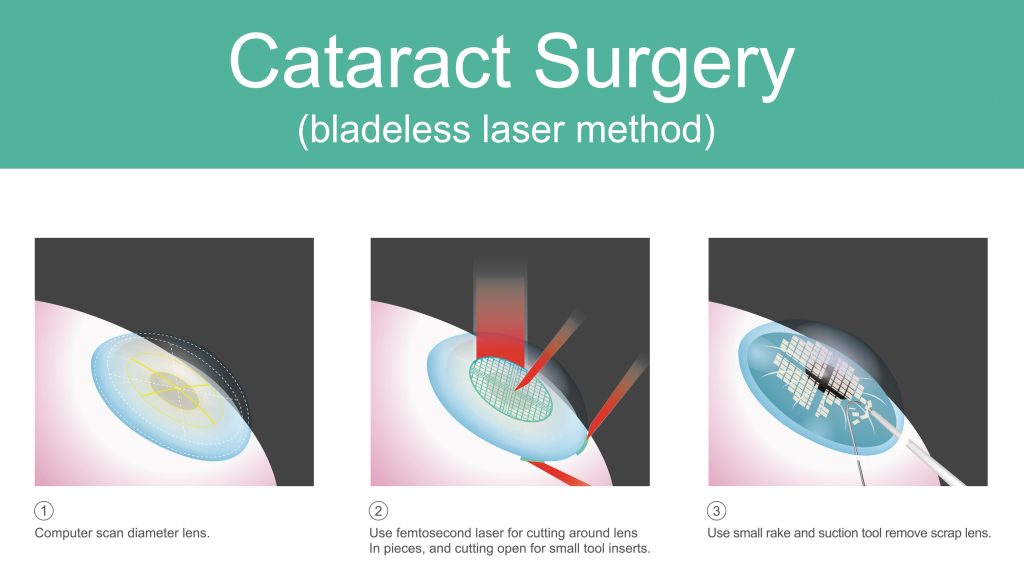
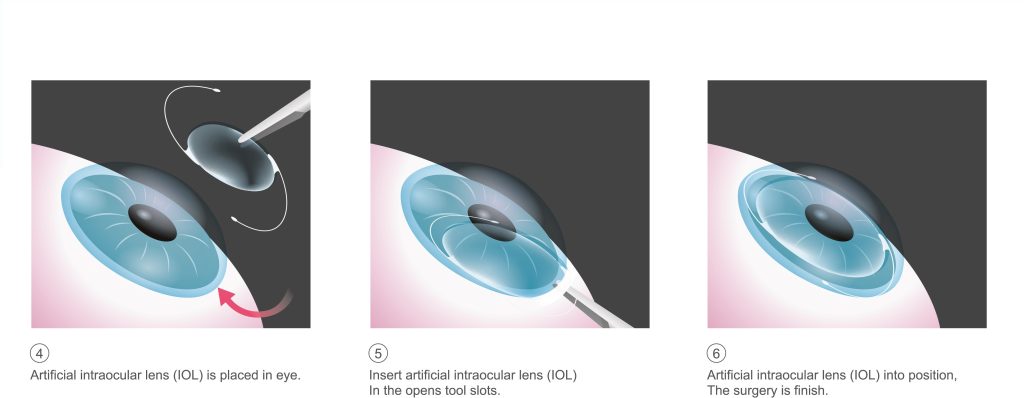
I have access to laser-assisted cataract surgery, which can offer advantages in selected complex cases, particularly where capsulotomy precision and lens centration are critical.
Technology is used selectively and thoughtfully — never as a substitute for sound surgical judgment.
A Measured, Honest Approach
Patients referred for complex cataract surgery can expect:
– Careful assessment and realistic counselling
– Clear explanation of risks and benefits
– Surgical decisions based on anatomy, not marketing
– A commitment to shared care with the referring optometrist
Book Your Cataract Appointment With Us
Take a the first step to clearer vision, and give our friendly team a call!
For optometrists and referrers
If you have a patient with:
– Corneal disease and a visually significant cataract
– Uncertain IOL suitability
– Prior refractive or corneal procedures
– A desire for precision without unnecessary risk
I am happy to assess, advise, and return patients to your care with a clear management plan.
Nothing but the best is good enough.
Cataract surgery for complex eyes requires experience, restraint, and respect for the cornea.
Glasses VS Contacts

Glasses or Lenses? Which to choose?
People who require prescription lenses or glasses often wonder which is better.
Some people strongly prefer one to another. For example, there are people who find glasses suit them better and they don’t want to bother with contact lens in Australia. However, there are others who swear by lenses and can’t tolerate spectacles. Generally, it’s a matter of personal preference but let’s look into both sides of the argument.
Comfort
Glasses
It takes time to get accustomed to spectacles. That can be heavy and look ungainly on your face. After a while, you get accustomed to them and would probably forget you’re wearing them. However, glasses have their way of making themselves known. No matter what the quality, they can get dirty and nothing is more annoying than dirty glasses.
Contact Lenses
Contact lenses are much more comfortable than glasses any day. While it takes time for you to get used to them, once you wear them, you can hardly feel their presence. Unlike glasses, a contact lens in Australia doesn’t get dirty and will give you clear vision at all times.If you are planning on wearing them for a longer time, its best to invest in eye drops to keep the lenses lubricated.
Convenience
Glasses
Some people feel that glasses are convenient. You can simply put them on your face whenever you want and they don’t have any specific storage requirements. While it’s recommended that you store them in a case to avoid accidents, you can simply place them on your desk. They may be useful when you’re in a hurry to go somewhere.
Contact Lenses
It takes only a couple of minutes toput them on, but be careful not to leave them lying around open on your study table. While some people feel that they are better off using glasses, once they start using contact lenses they realise that they are easier to carry around as they are distinctly smaller in size. It’s also possible to get lens cleaners in travel pack sizes which adds to the convenience factor.
Vision
Glasses
Anyone who has worn both spectacles and lenses would tell you that without a doubt, lenses offer superior vision. Eyeglasses, even with the right prescription, don’t offer perfect clarity. As mentioned earlier, dust and scratches affect the vision. Moreover, wearing them in cold or wet weather can obstruct your sight. If you want good clarity with eyeglasses, you need to keep them meticulously clean and replace the lenses when they get too damaged.
Contact Lenses
Without question, contact lens in Australia provide superior vision. They’re as close as you can get to natural seeming eye-sight without surgery. You get good normal as well as peripheral sight. As they don’t get dirty, you don’t have to strain your eyes. You can wear them in any kind of weather easily and still have very clear vision.
We encourage people to try lenses simply because the advantages greatly outweigh any inconveniences.
Cross linking gets a Medicare Number
Thank God and about time
Medicare Number for Keratoconus cross linking
After a decade of performing corneal cross linking (CXL) to stabilise progressive keratoconus and treating thousands of patients eyes medicare relief is finally here. The procedure is set to receive a medicare number from the 1st of May 2018. Once confirmed patients can now expect a significant rebate with the treatment.
What does cross linking (CXL) cost in Brisbane?
Once a medicare number for corneal cross linking (CXL) is activated Eyesmatter will be directly billing all insured patients, where that facility exists. Eyesmatter will also have bulk billing options for students and health card holders for the foreseeable future. Eyesmatter will also be reaching out to those who have previously deffered surgery for financial reasons.
Closing the GAP with crosslinking
For the last decade too many patients have defered corneal cross linking (CXL) and lost vision. Corneal transplantation rates for keratoconus have plummeted world wide during this time. Less so in Australia. With medicare on board that will change for the better.
What generation do you belong to; crosslinking or transplant?
Those who had a corneal transplant or those who had cross linking (cxl). There has never been more hope for Keratoconus.
Targeted Screening
Eyesmatter recommends targeted screening of those at risk. We offer bulk billed comprehensive eye examinations in our Brisbane based clinics which includes 3D imaging of the cornea as part of Keratoconus screening. It is open without referral to those with a first degree relative with keratoconus. It is also open to those with an optometrist referral who are concerned about a drop in vision, Eyerubbers, high astigmatism, frequent spectacle changes and bad allergies. We know who you are!. 60% of patients will have small gains in vision after cross linking. So why not come before you vision drops rather than after.